

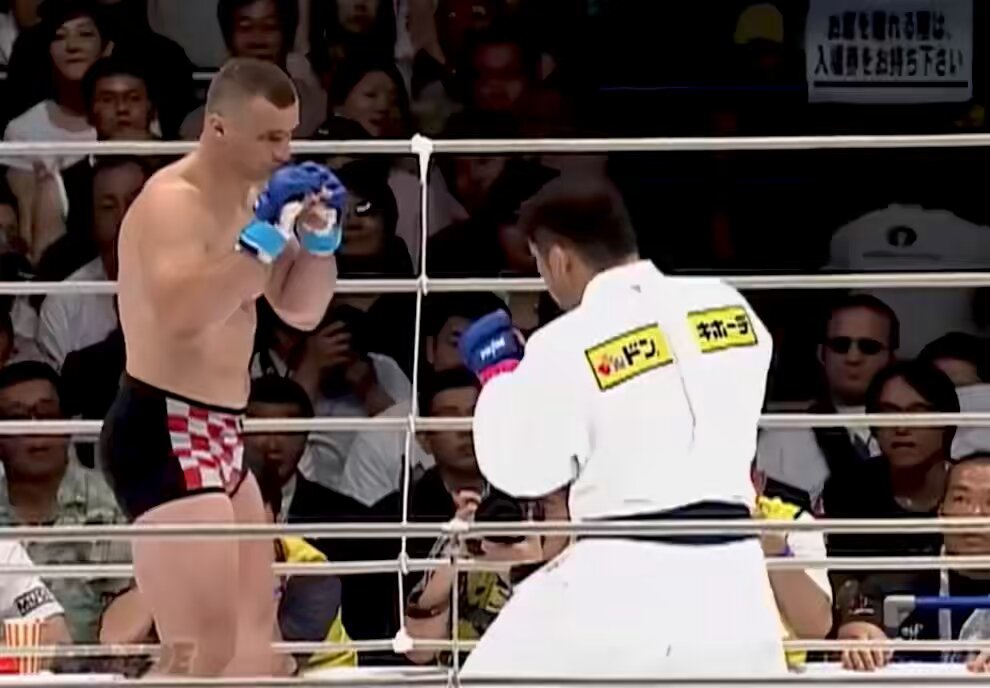
Twenty years ago, Mirko Cro Cop dismantled Hidehiko Yoshida at a PRIDE event with a series of punishing low kicks that left Yoshida unable to stand. The fight was ultimately stopped when Yoshida's corner threw in the towel.
Twenty years ago this week, Mirko Cro Cop handed Hidehiko Yoshida a punishing defeat at a PRIDE event, systematically breaking down the Japanese judoka with relentless low kicks until Yoshida's corner intervened and stopped the contest.
The finish underscored Cro Cop's reputation as one of the most dangerous strikers of his era. The Croatian heavyweight was renowned for his precision and power on the feet, and against Yoshida he found a blueprint that worked ruthlessly — targeting the legs until his opponent could no longer support his own weight.
Yoshida, now 56, entered that fight carrying genuine combat sports credibility. A decorated judoka who transitioned into MMA, he would go on to compile a career record of 6-8-1. His game was built around the clinch and the mat, averaging 2.2 submission attempts per 15 minutes across his career, with takedowns added at a rate of 1.09 per 15 minutes. Standing five-foot-eleven and fighting out of an orthodox stance under the Yoshida Dojo banner, he represented the kind of grappling threat that many strikers struggled to handle.

Cro Cop, however, never allowed the fight to reach that phase. By dismantling Yoshida's base with low kicks, he neutralized the judo before it could be deployed.
Why it matters
- The finish remains one of the cleaner examples of a striker using leg attacks to negate a grappler's takedown threat
- Yoshida's corner stoppage highlighted the growing acceptance of protective intervention in MMA at that time
- The bout is a useful reference point for how PRIDE-era heavyweight striking has influenced modern fight strategy