

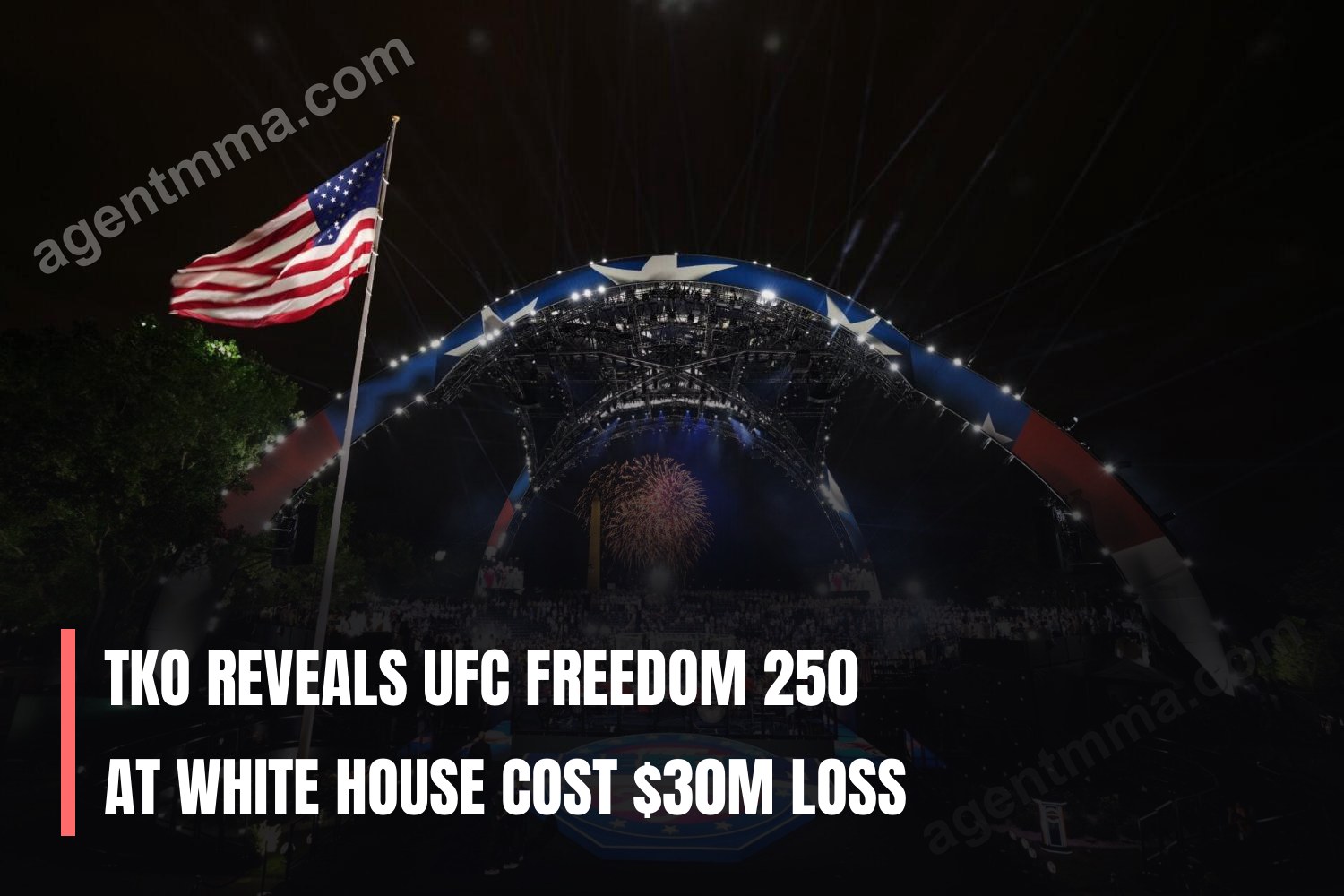
UFC closed the second quarter of 2026 with revenue of $535.7 million, a 29% increase of $119.8 million year-over-year. The growth came despite the UFC White House card, which was funded by the promotion and resulted in a loss of ticket-sale income and one fewer pay-per-view event on the 2026 calendar.
The UFC posted its strongest second-quarter revenue figure on record, reporting $535.7 million for Q2 2026 — a year-over-year increase of $119.8 million, or 29 percent, the promotion disclosed on August 3, 2026.
The headline number is notable given the headwinds the organization absorbed during the quarter. The UFC's White House card, funded directly by the promotion rather than through traditional gate receipts, stripped the quarter of ticket-sale income and effectively reduced the pay-per-view slate by one event compared to the prior year's calendar. That the organization still delivered a 29 percent revenue jump despite those self-imposed costs underscores the breadth of its income streams beyond live-gate and PPV buys.
Why it matters
- A 29% year-over-year revenue gain in a quarter that contained one fewer pay-per-view event signals strong underlying growth from media rights, sponsorship, or other revenue lines.
- The White House card represents an unconventional promotional spend — absorbing its cost while still growing top-line revenue suggests the UFC's business model has significant cushion.
- The result sets a high baseline heading into the back half of 2026, where a full pay-per-view schedule could amplify the growth trajectory further.
The $535.7 million figure adds to a consistent pattern of revenue expansion for the sport's leading promotion, and the willingness to fund a high-profile standalone event at a net ticket-revenue loss without dragging down overall quarterly performance reflects the scale the UFC has reached as a global sports property.