
Does Caffeine Improve MMA Performance? What Data Shows
Caffeine and MMA performance don't always move together. Compare a direct punching trial, combat-sport reviews, fighter habits and the cost to sleep.
Quick answer
Caffeine can help some parts of combat-sport performance, but it hasn't been shown to increase UFC win rates. The direct MMA evidence is narrow: a controlled trial in 11 professional fighters found no improvement in punching force or frequency. Broader research finds benefits in some strength and fitness tests, with less consistent gains during simulated combat. That distinction matters. Feeling sharper before training doesn't prove you'll land cleaner punches, defend takedowns, or win rounds. Sleep disruption can also change whether a short-term boost is worth using.
Data snapshot: 2019 MMA trial: 11 professional men. A 2022 combat-sport review: 26 studies, 323 athletes. A September 2026 review: 43 reports, searched through July 2026. These are performance studies, not UFC win-rate data.
Does caffeine improve MMA performance or just make you feel ready?
Caffeine and MMA performance are different questions depending on what you measure. Feeling awake, producing force, making decisions, and winning a fight aren't interchangeable outcomes.
Nanci Guest and colleagues' 2021 sports-nutrition position stand describes benefits across several exercise tasks. It also stresses differences between people and possible sleep and anxiety effects. Those findings give caffeine a plausible role in training. They don't establish a competitive advantage in the Octagon.
Think about the claim you want tested. If a product promises harder punches, look for punch measurements. If it promises better fight endurance, a brief grip test won't settle that claim.
The same rule applies to fighter interviews. Dustin Poirier and Forrest Griffin have described caffeine use publicly. Their accounts explain why athletes use it. They cannot tell you what would have happened without it.
What happened when researchers tested punching power?
Arthur Persio de Azevedo and colleagues tested 11 professional male MMA athletes in 2019. Each athlete completed caffeine and placebo conditions in a blinded crossover experiment. That means each fighter served as his own comparison.
The protocol used 5 mg/kg of caffeine, taken 60 minutes before testing. Fighters threw dominant-arm straight punches during three 15-second sets, with 45 seconds of rest between sets. These are study details, not a dosing recommendation.
Caffeine didn't improve average force, peak force, or punch frequency. It also didn't improve the recorded effort-related ratings.
That's a useful negative result. It directly challenges the claim that caffeine automatically makes an MMA fighter punch harder. But the experiment tested a short, fixed task against a target. It didn't test combinations against an opponent, defensive reactions, or performance across a full fight.
Eleven men also cannot represent every fighter. A small trial can miss modest effects or differences between people. The fair conclusion stays close to the measurement: this protocol found no punch-performance benefit.
Why do broader combat-sport studies sound more positive?
Slaheddine Delleli and colleagues' 2022 review combined research from several combat sports. Its 26 studies included 323 athletes, with just 11 from MMA. Those were the fighters in the punching experiment above.
Don't count them twice.
The review found small average benefits for handgrip strength and throws during a judo fitness test. It found no statistically significant pooled improvement in the number of offensive actions during simulated fights.
| Measure in the 2022 review | Pooled finding | What it answers |
|---|---|---|
| Handgrip strength | Small benefit with caffeine | Performance on a grip-strength test |
| Throws in a judo fitness test | Small benefit with caffeine | Output during a set throwing task |
| Offensive-action count across 8 studies | No statistically significant benefit | Whether athletes attempted more attacks in simulated combat |
| Offensive-action duration across 4 studies | No statistically significant benefit | Whether attacking actions lasted longer in simulated combat |
Another meta-analysis reached a more positive result. Javier Diaz-Lara and colleagues reviewed 25 studies, published online in 2022. They found increased offensive-action counts and duration.
Delleli's team used first-bout data when studies included repeated combats. They noted that including later bouts could help explain the different findings. That makes the selection of bouts part of the answer. Neither review tested UFC wins.
The comparison explains why headlines can conflict without either paper being wrong. A grip test and an attacking exchange ask different things of an athlete.
For MMA analysis, the gap is the finding. Better performance in an isolated task doesn't establish better choices under pressure. More attempts would not, by itself, establish more effective attacks either.
You should also resist turning a small average effect into a promise for every athlete. The average describes the tested group. It doesn't identify who benefits, who feels worse, or whose performance stays unchanged.
Does newer research close the gap?
Jingang Fan and colleagues published an updated review in September 2026. It included 43 reports, with searches running through July 2026. Of these, 29 tested caffeine alone and 14 examined combined protocols.
The authors found benefits for selected tasks, alongside frequent results showing no benefit. They judged effects dependent on the sport, task, athlete, and protocol. They didn't calculate a UFC caffeine win rate.
This was a narrative review, so the authors described patterns rather than combining everything into one effect estimate. That choice reflects how different the tests were.
The combined protocols also need care. If a study changes caffeine and another part of preparation, you need the right comparison to isolate caffeine's contribution. A successful package doesn't prove each ingredient helped.
The updated evidence supports a measured position: caffeine may help a particular task under tested conditions. It still doesn't justify calling coffee a proven fight-winning aid.
What do Poirier and Griffin actually tell us?
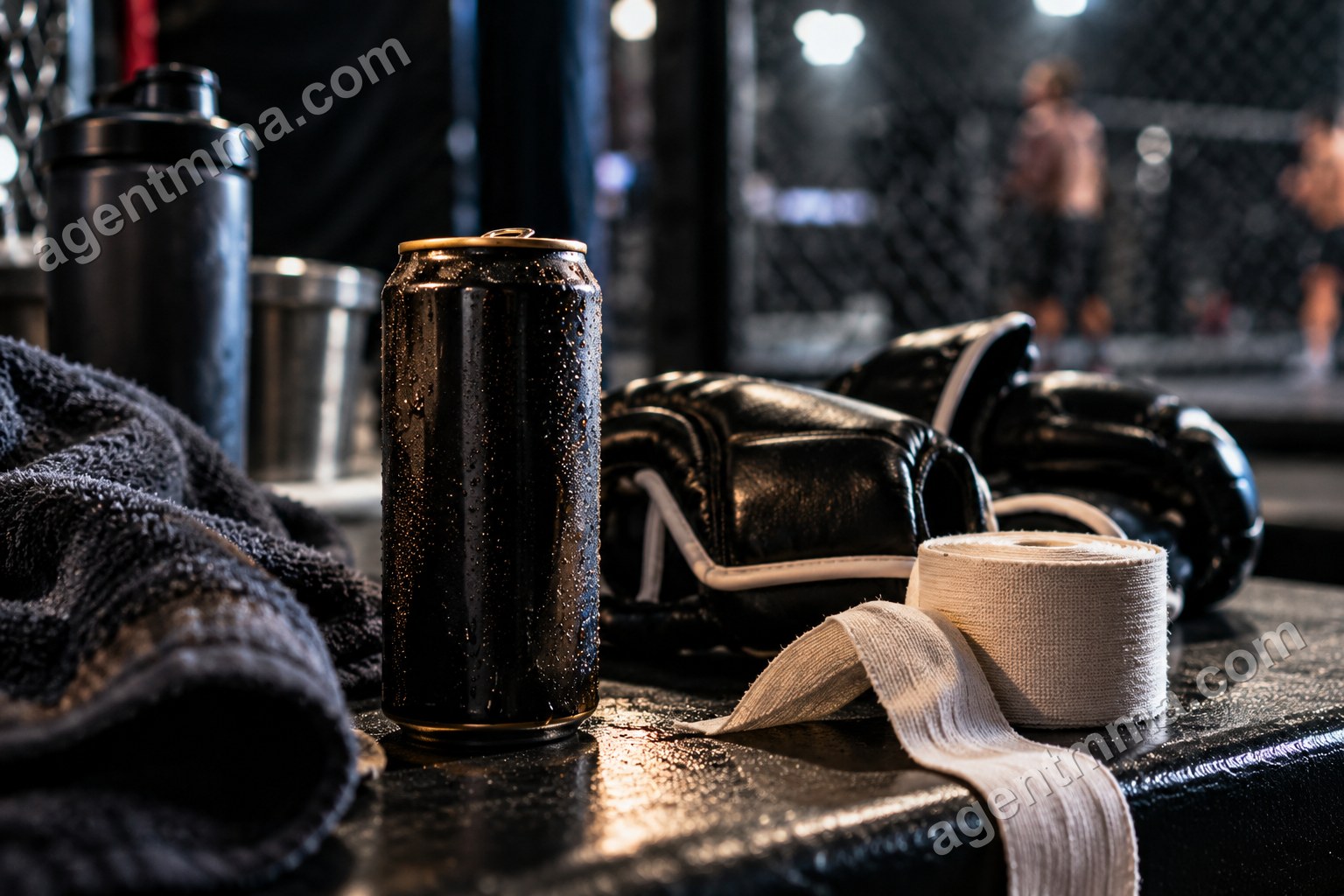
Poirier discussed caffeine during a 2021 Forbes interview about his Celsius partnership. Griffin described drinking coffee before fights in a 2011 UFC interview. Neither account was a controlled test.
Those dates matter. These are historical accounts of personal habits, not verified descriptions of either man's routine today.
The commercial context matters too. Poirier's interview can establish what he said about a product. It cannot establish that the product caused a training benefit. That doesn't make his experience false. It changes what the evidence can support.
Griffin's pre-fight ritual raises the same issue without a measured comparison. You would need comparable sessions with and without caffeine to test a performance claim. Recalling successful nights doesn't provide that comparison.
Use fighter stories to find questions worth testing. Don't use them to fill gaps in trial data. A recognizable name cannot turn a personal preference into a population effect.
Could caffeine before training cost you sleep?
A training benefit is incomplete if you ignore what happens afterward. Carissa Gardiner and colleagues tested caffeine timing in 23 men, using home sleep recordings and diaries. Their trial appeared online in 2024 and in the 2025 issue of SLEEP.
Participants received placebo, 100 mg, or 400 mg, with caffeine tested 12, 8, and 4 hours before bed. The 100 mg conditions showed no statistically significant sleep effects. The 400 mg conditions disrupted aspects of sleep, including when taken 12 hours before bed.
These participants weren't an MMA sample. The finding cannot tell you how much sleep a particular fighter would lose. It also doesn't mean the lower dose is harmless for everyone.
It does expose a weakness in judging caffeine only by how training feels. A session can feel productive while your later sleep changes. The trial also found that subjective sleep reports didn't always capture measured disruption.
For late training, include bedtime and next-day readiness in the assessment. If you record only energy during the session, you've chosen a measure that can miss the cost.
How should you assess caffeine claims in practice?
Start with an outcome you can describe before seeing the result. That might be output in a repeatable drill or execution during a fixed technical task. Avoid treating enthusiasm as your only performance measure.
Keep the comparison fair. Changing caffeine, training partners, session length, and sleep together makes the result hard to interpret. A personal log won't become a clinical trial, but it can expose obvious confounders.
- Record the product, caffeine amount, timing, and training task.
- Record sleep and any unwanted effects alongside session output.
- Compare similar sessions, including the ones that felt disappointing.
- Review the pattern with a qualified sports dietitian before making competition changes.
This is a way to ask better questions, not a promise that experimentation will find a benefit. Fan's review recommends assessing individual responses during training before competition.
For fight predictions, the bar is higher. None of these sources supplies a validated conversion from caffeine use to UFC win probability. Adding a confidence bump because a fighter mentions coffee would create a number the evidence doesn't support.
How solid is this data?
The direct MMA trial uses a useful crossover design, but its sample and task are narrow. The broader reviews add sports and outcomes, not a large set of UFC fights.
The reviews overlap with earlier research, so their study totals cannot be added as independent evidence. The sleep trial addresses a possible cost, with no direct fight-performance measurement. The fighter interviews provide context only.
This article synthesizes published work. It doesn't report an AgentMMA outcome study. The cited research doesn't support a UFC-specific win-rate estimate.
FAQ
Does caffeine make MMA fighters punch harder?
The direct 2019 trial in 11 professional male MMA athletes found no improvement in punch force or frequency. That result applies to its tested protocol. It doesn't rule out every possible effect in other tasks or fighters.
Is coffee before an MMA fight a proven advantage?
No cited study establishes that coffee before a fight increases UFC win probability. Caffeine can help selected exercise tasks, but that evidence doesn't prove better fight results.
Are energy drinks better than coffee for MMA?
The evidence reviewed here doesn't establish a general winner. Products, caffeine amounts, timing, and other ingredients differ. A fighter endorsement cannot replace a direct comparison of the products and outcomes you care about.
Can caffeine hurt recovery after evening training?
It can disrupt sleep. The Gardiner trial found sleep effects with 400 mg even 12 hours before bedtime. That was a study of 23 men, not a universal cutoff or an MMA recovery trial.
Sources & further reading
The data and published sources behind this article.
- de Azevedo et al. (2019): MMA punching trial (pmc.ncbi.nlm.nih.gov)
- Delleli et al. (2022): Combat-sport caffeine meta-analysis (pmc.ncbi.nlm.nih.gov)
- Fan et al. (2026): Updated combat-sport caffeine review (www.frontiersin.org)
- Guest et al. (2021): ISSN caffeine position stand (pmc.ncbi.nlm.nih.gov)
- Gardiner et al.: Caffeine dose, timing and sleep (pmc.ncbi.nlm.nih.gov)
- UFC: Forrest Griffin Spills the Beans (www.ufc.com)
- Forbes: Dustin Poirier on his Celsius partnership (www.forbes.com)
- Diaz-Lara et al.: Combat-sport caffeine meta-analysis (pubmed.ncbi.nlm.nih.gov)
Put the data to work
Compare any two fighters head-to-head, or see what our AI predicts for upcoming UFC fights.
More from the MMA Lab
Vegan Diet for MMA: Does It Hurt Strength and Cardio?
Does a vegan diet for MMA hurt strength or cardio? Compare athlete trials, Nate Diaz's diet claims, protein needs and the limits of fight-performance evidence.
Creatine for MMA: Does It Help Fighters Perform Better?
Does creatine for MMA improve power or just add weight? Compare combat-sport trials, Makhachev and Talbott's accounts, and what the evidence cannot prove.