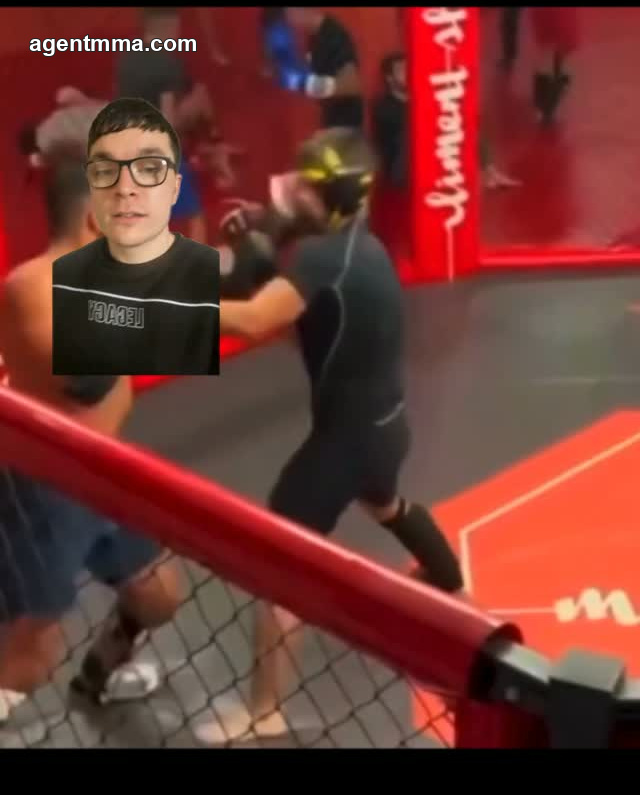

Josh Hokit made a vulgar personal attack on Curtis Blaydes involving an offensive joke about his appearance and his parents. The comment appears to be an attempt at shocking trash talk ahead of their scheduled fight. This represents an escalation in the pre-fight verbal exchanges between the two heavyweights. The nature of the insult crosses into personal territory rather than focusing on fighting skills or predictions.
Josh Hokit escalated pre-fight tensions with Curtis Blaydes this week, directing a crude personal insult at the heavyweight contender that veered sharply away from the usual fight-focused trash talk and into an offensive joke about Blaydes' appearance and his parents.

Curtis "Razor" Blaydes is one of the most decorated heavyweights in the division, currently ranked fourth in the world with a professional record of 19-6-0. The 35-year-old American, who trains out of Elevation Fight Team, stands six-foot-four with an 80-inch reach and has built his reputation as a relentless pressure fighter. He averages 5.38 takedowns per 15 minutes, one of the highest rates in the heavyweight division, and lands 3.56 significant strikes per minute at 50 percent accuracy.
Hokit, who fights under the nickname "The Incredible Hok," enters this matchup undefeated at 5-0-0. The 28-year-old has not yet established measurable UFC statistical benchmarks, but his perfect record signals the kind of confidence that may be driving the aggressive pre-fight rhetoric.

Why it matters
- Blaydes is a top-four heavyweight whose experience and grappling output vastly outweigh anything Hokit has faced to date.
- The personal nature of the insult suggests Hokit is attempting to generate attention and possibly get inside Blaydes' head ahead of their scheduled meeting.
- A win for Hokit over a ranked veteran like Blaydes would be a seismic debut-level statement in the heavyweight division; a loss would raise questions about whether the trash talk was a calculated distraction or a symptom of inexperience.
- The verbal escalation signals that bad blood between the two camps may intensify in the weeks leading up to the fight.