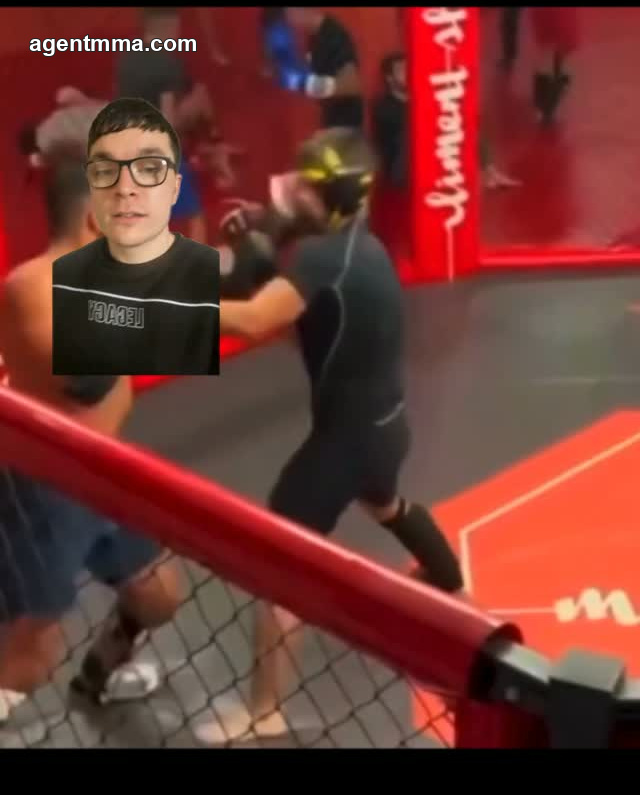

Josh Hockit exhibited bizarre conduct at the weigh-ins, talking to himself in what was described as erratic behavior. The post characterizes his actions as potentially unhinged or intended to create psychological warfare. Hockit has been engaging in strange antics including confronting fighters in the lobby and delivering unusual monologues about violent imagery. His unconventional approach has reportedly generated more support for his opponent Curtis Blaydes than Blaydes typically receives. The behavior appears to be part of a deliberate strategy to gain attention, though its effectiveness remains uncertain.
Josh Hockit turned heads at the weigh-ins for his upcoming heavyweight bout against Curtis Blaydes, exhibiting erratic behavior that included talking to himself and delivering unusual monologues laced with violent imagery.
The conduct, which observers described as unhinged, appears to be a calculated psychological tactic on Hockit's part. He has also reportedly been confronting fighters in the lobby during fight week, adding to the spectacle. Whatever the intended effect, the strategy appears to have backfired in at least one measurable way — the strange antics have generated more fan support for Blaydes than the heavyweight contender typically commands heading into a fight.

Blaydes, nicknamed "Razor," enters the matchup ranked fourth in the UFC heavyweight division. The 35-year-old American, who trains out of Elevation Fight Team, carries a record of 19 wins and 6 losses and brings a well-established, pressure-heavy game built around elite wrestling. Standing six-foot-four with an 80-inch reach, he averages 5.38 takedowns per 15 minutes, one of the more dominant grappling rates in the division, and lands strikes at a 50 percent accuracy clip.
Why it matters
- Blaydes sits at number four in the heavyweight rankings, meaning a win keeps him firmly in title contention
- Hockit's fight-week behavior has shifted crowd sentiment toward Blaydes, potentially affecting the atmosphere inside the arena
- Whether Hockit's psychological approach translates into any in-cage advantage against a seasoned, composed competitor like Blaydes remains an open question