
Does Ramadan Fasting Hurt MMA Performance? The Evidence
Does Ramadan fasting hurt MMA performance? Compare strength, power and cardio studies, Khabib and Chimaev's choices, and what the evidence cannot prove.
Quick answer
Ramadan fasting can affect MMA performance, but the evidence doesn't support an automatic drop in every fighter's strength or cardio. Short, repeated efforts look more vulnerable than isolated strength tests. Small combat-sport studies disagree, and none of the studies reviewed here measures UFC win probability. Khabib Nurmagomedov and Khamzat Chimaev illustrate scheduling choices around Ramadan, though those choices aren't controlled experiments. To assess a matchup, you need confirmed information about the camp, meals, fluids, sleep and fight timing. A religious label tells you none of that.
Data snapshot: Research published in 2020–2026: an 11-study meta-analysis, an overview of 14 reviews, and separate trials involving 24 combat-sport athletes and 9 silat athletes. These measure exercise performance, not UFC outcomes.
What changes when a fighter observes Ramadan?
Ramadan fasting restricts food and fluid from dawn until sunset, unlike a training diet that allows water throughout the day. Aspetar's exercise guidelines treat meals, hydration, sleep and training schedules as linked concerns.
You need to separate the calendar from the athlete's actual routine. Training while fasting, training after iftar, and competing after Ramadan describe different situations. Iftar is the meal that breaks the fast at sunset, while suhoor is the meal before dawn.
For fight analysis, the useful question is what changed inside camp. Check whether hard sessions moved, sleep shifted, or the athlete could maintain the intended workload. Those details are more informative than counting days on a calendar.
Don't infer fasting behavior from a fighter's name or nationality. Even confirmed religious observance doesn't tell you when that athlete ate, drank or trained before a particular bout.
What do the performance studies actually find?
The research gives a mixed answer because it measures different tasks: heavy lifts, brief jumps and sustained hard work aren't interchangeable tests.
Abd-Elbasset Abaïdia and colleagues pooled 11 studies in their 2020 meta-analysis. They found lower peak and mean power during Wingate or repeated-sprint testing. The Wingate test uses an all-out effort on a stationary bike. They found no pooled impairment in several other measures, including strength, jump height and aerobic performance.
Two papers published in 2026 make that contrast concrete. Abdullah Demirli's group tested 24 male combat-sport athletes, while Jacky Hou An Ong's group studied 9 male national-level pencak silat athletes. Neither group consisted of a verified UFC roster.
| Study | Sample and comparison | Reported result | What it cannot establish |
|---|---|---|---|
| Abaïdia, 2020 | 11 studies; Ramadan fasting and physical performance | Lower power in Wingate or repeated-sprint tests; several other measures unchanged | A universal decline across every physical skill |
| Demirli, 2026 | 24 men; non-fasting control and fasting nutrition conditions | Reported lower Wingate power and bench-press strength in some fasting conditions; no significant differences in leg press, jump or grip | A UFC fight-performance penalty |
| Ong, 2026 | 9 men; final Ramadan week versus one week afterward | No significant differences across separately performed strength and power tests | Proof that repeated fight efforts stay unchanged |
Read each result at the level measured. The table doesn't show that fasting always reduces power, but it shows why the test, comparison and athlete group matter.

Why can strength hold up while other tests decline?
Producing a strong effort doesn't answer how well you repeat it under fatigue, which is the central measurement problem for MMA.
Imagine a fighter completing an isolated strength test comfortably: you still haven't measured repeated takedown attempts, defensive scrambles or decisions under pressure. Treating that test as a complete cardio assessment asks it to do too much.
The reverse mistake is just as common. A decline on a cycle test doesn't prove that a fighter will lose exchanges or tire first. There's an opponent involved, and technique, pacing and tactical choices also enter the contest.
Use the laboratory evidence to identify questions worth checking, rather than to script the fight. For Chimaev, a useful question would concern repeated wrestling efforts under his actual camp conditions. These papers do not answer it about him.
For Nurmagomedov, a training adjustment explains his preparation approach without revealing what his performance would have been under a different schedule.
What do Khabib and Chimaev actually show?
Their public accounts show scheduling choices, not a measured biological penalty.
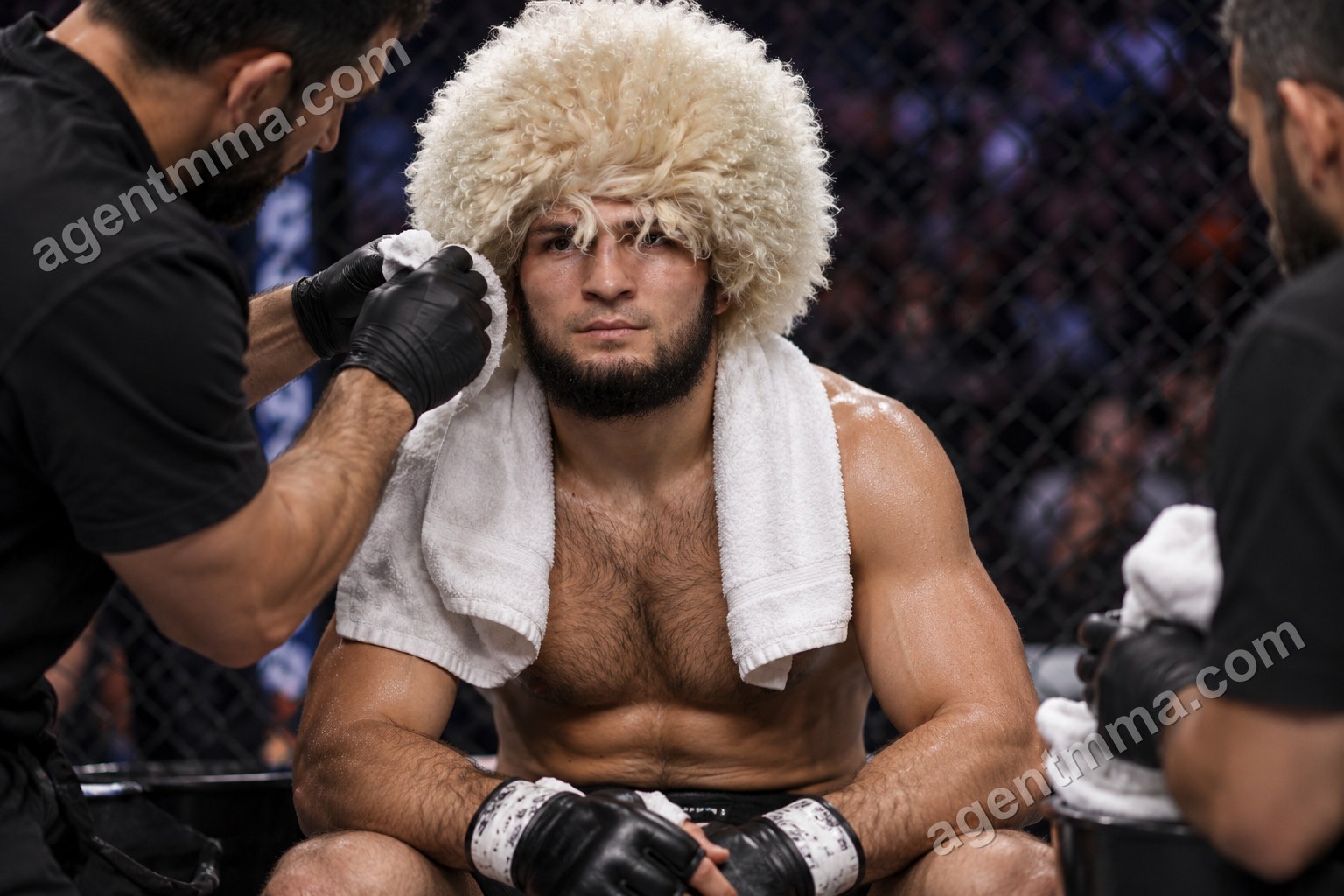
In April 2020, MMA Fighting reported that Nurmagomedov continued training during Ramadan at a reduced pace. That account describes his preparation at the time, rather than a rule for every Muslim fighter or a current booking update.
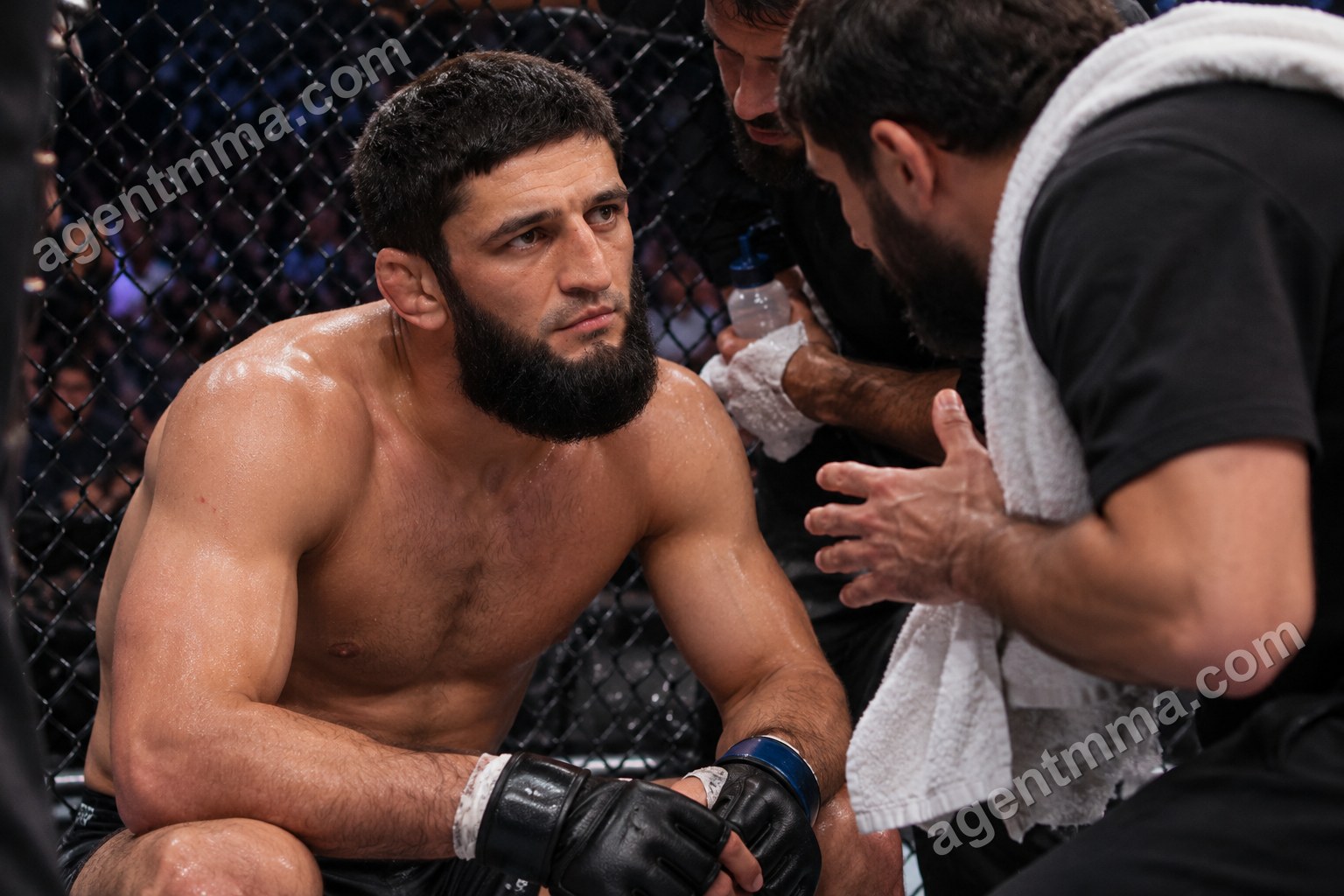
Chimaev ruled out UFC 300 while discussing Ramadan in February 2024, according to MMA Fighting. The relevant issue included preparation around the event, rather than simply whether the bout happened during daylight.
A later report adds a useful warning: in November 2025, Chimaev discussed returning after Ramadan while also revealing planned foot surgery. Assigning that whole delay to fasting would erase a documented injury factor.
Those separate, dated accounts don't establish either fighter's present training routine. They also show why an honest analyst should distinguish an athlete's stated preference from a scientific finding.
You can respect the scheduling decision without claiming the athlete would otherwise lose.
Does fighting after sunset remove the issue?
An evening bout and a daytime training session pose different questions. After sunset, a fasting athlete can eat and drink, but that alone doesn't tell you how the preceding camp went.
Aspetar's guidance favors scheduling demanding work around access to food and fluids while protecting sleep. Moving a session later also moves its recovery window, so the whole schedule needs to fit rather than one workout looking ideal in isolation.
This matters when you read a claim that a fight takes place after Ramadan. The event date neither describes the weeks of preparation before it nor proves those weeks were compromised.
Ask for the missing link: was there a documented disruption to training, or only an assumption based on the date? Without that distinction, calendar-based analysis can sound precise while telling you little.
Can Ramadan predict UFC results?
The sources reviewed here provide no validated Ramadan adjustment for UFC win probability. A laboratory performance change cannot be converted directly into a change in betting odds.
A credible outcome study needs verified fasting exposure, because marking every Muslim fighter as fasting would misclassify the factor being studied. Marking every bout during Ramadan would also miss camps that overlapped it before a later fight.
The study would then need opponent quality, age, division, injury information and fight timing. It should distinguish fasting on fight day from fasting during preparation, while accounting for repeat appearances by the same athlete.
Selection creates another problem because fighters who accept these dates may differ from those who decline them. Their results would describe that selected group, not every athlete who observes Ramadan.
If you track predictions, record confirmed camp information separately from your interpretation, without adding a blanket fasting penalty. Missing information should stay missing, rather than become a confident story after the result.
How should fighters and coaches use this evidence?
Use it to plan and monitor, rather than copy a famous fighter's timetable. Aspetar's guidance supports individual adjustments to training, nutrition, hydration and sleep, without offering a guaranteed formula for winning fights.
A practical review can focus on a few questions:
- Does the session schedule allow suitable food, fluids and recovery around demanding work?
- Is the athlete maintaining planned training quality, or reporting a repeated decline?
- Has moving training changed sleep in ways the team hasn't tracked?
- Are injury recovery and weight management being assessed separately from fasting?
These questions make the plan reviewable and help you avoid blaming Ramadan for every poor session. They also guard against ignoring a problem because another athlete copes well.
For weight-class athletes, Aspetar advises planning competition weight ahead of Ramadan; fasting isn't evidence that an aggressive weight cut is safe. Personal medical concerns belong with a qualified clinician, and nutrition planning with a qualified sports dietitian.
How solid is this data?
There is enough evidence to challenge blanket claims, but too little to forecast a specific fight.
Khaled Trabelsi's 2024 overview included 14 systematic reviews and rated their methods low to critically low quality. Its findings linked Ramadan observance with poorer high-intensity exercise performance, alongside changes in sleep and other factors.
The direct combat-sport studies here are small and male-only, and silat testing isn't UFC competition. A lack of statistical significance in 9 athletes doesn't prove that no meaningful effect exists.
Demirli's control test also came before Ramadan. The methods describe giving water to some athletes before testing, without clearly explaining how this applied during fasting. That reporting ambiguity limits conclusions about abstaining from fluids.
Reviews may also include overlapping studies, so their sample counts cannot simply be added. Different testing times and comparison periods make a single headline percentage misleading.
This article combines published research and dated fighter reporting, without presenting an original AgentMMA fight-outcome study. It offers no Ramadan win rate or estimate of an individual fighter's performance loss.
FAQ
Can UFC fighters fight during Ramadan?
Yes. Ramadan doesn't mean every Muslim fighter stops competing, because individual choices and preparation differ. A bout scheduled during the month also doesn't establish whether a particular fighter fasted on fight day.
Does Ramadan fasting reduce strength or cardio?
Not uniformly. The 11-study meta-analysis found lower power in some demanding tests but no pooled reduction in strength or aerobic performance. Small combat-sport studies also disagree, with the task and conditions affecting how you should read their results.
Why did Khabib avoid fights around Ramadan?
Historical reporting describes Nurmagomedov adjusting preparation and reducing training pace during Ramadan, which explains his scheduling approach. It doesn't establish a mandatory recovery period or prove every fasting fighter performs worse.
Is training after iftar better for MMA?
It allows access to food and fluids around training, which can make demanding sessions easier to organize. Aspetar's guidance also asks teams to protect sleep, and the best schedule depends on the athlete's recovery and practical constraints.
Sources & further reading
The data and published sources behind this article.
- Abaïdia et al.: Effects of Ramadan Fasting on Physical Performance (2020) (pubmed.ncbi.nlm.nih.gov)
- Trabelsi et al.: Ramadan fasting and exercise performance, overview of systematic reviews (2024) (pubmed.ncbi.nlm.nih.gov)
- Demirli et al.: Protein sources at sahur and combat-sport performance (2026) (journals.plos.org)
- Ong et al.: Ramadan fasting, strength and power in martial-art athletes (2026) (journals.sagepub.com)
- Aspetar: Ramadan Fasting and Exercise for Healthy Individuals (aspetar.com)
- MMA Fighting: Khabib Nurmagomedov teases September return (2020) (www.mmafighting.com)
- MMA Fighting: Khamzat Chimaev bows out of UFC 300 main event sweepstakes (2024) (www.mmafighting.com)
- MMA Fighting: Chimaev foot surgery and post-Ramadan return plans (2025) (www.mmafighting.com)
Put the data to work
Compare any two fighters head-to-head, or see what our AI predicts for upcoming UFC fights.
More from the MMA Lab

Do Elevation Training Masks Help MMA Cardio? The Data
Do elevation training masks improve MMA cardio? Compare controlled fitness trials, a 2026 sprint study, altitude claims and what fighter photos cannot prove.
MMA Cardio: Does a Higher VO2 Max Mean Better Fighting?
Does better MMA cardio mean better fighting? Compare VO2 max, sparring workload and conditioning studies, with Diaz and McGregor showing the limits.