
Do UFC Crowds Change Finish Rates? What 731 Fights Show
The UFC crowd effect looked backwards in 731 fights: empty arenas had more finishes, driven by submissions. See the numbers, models, and limits.
Quick answer
UFC fights in empty arenas finished early more often in one 731-bout study. The finish rate was 52.42% without spectators and 45.53% with them. The 6.89-point gap came almost entirely from submissions, not knockouts. Adjusted models kept the same direction. Still, this was a COVID-era comparison, not a controlled experiment. Training, travel, matchmaking, venues, and fighter availability changed at the same time. The crowd may matter, but these data don't prove that removing fans causes more finishes.
Data snapshot: 731 UFC fights from matched March 14-December 19 windows in 2019 and 2020; 351 empty-arena bouts, 380 crowd bouts; a second study covered 86 fighters and 586 career bouts.
Did UFC fights finish more often without crowds?
Yes in the main study, but the size and source of the gap matter.
Vojtech Kotrba compared the same calendar window before and during the COVID-19 shutdown. The crowd sample ran from March 14 to December 19, 2019. The empty-arena sample covered those dates in 2020.
That design avoids comparing a full year with a short shutdown. It doesn't make the groups identical. Different fighters, cards, locations, and training conditions still entered each sample.
The raw result is easy to read:
| Fight result | Empty arena, n=351 | With crowd, n=380 | Rate difference |
|---|---|---|---|
| Submission | 72 (20.51%) | 55 (14.47%) | +6.04 points |
| KO/TKO | 112 (31.91%) | 118 (31.05%) | +0.86 points |
| All early finishes | 184 (52.42%) | 173 (45.53%) | +6.89 points |
| Decisions | 167 (47.58%) | 207 (54.47%) | -6.89 points |
The knockout rates were almost level. Submissions supplied most of the difference. That detail changes the story.
If crowd noise simply pushed fighters into wilder exchanges, you might expect a wider KO/TKO gap. The table doesn't show one. Any useful explanation must account for the grappling result.
Why did submissions create nearly the whole gap?
The honest answer is that the study cannot tell us.
An empty building changes the sound of a fight. Athletes can hear coaches, breathing, and mat contact more clearly. That could help a grappler follow detailed instructions or spot a transition.
It could also help the defender.
The data contain outcomes, odds, divisions, and fighter identities. They don't measure corner volume, coaching quality, stress, or the position before each submission. So the coaching idea is plausible, not tested.
Opponent selection offers another route. COVID withdrawals and travel limits changed who could accept fights. A small shift toward uneven grappling matchups could lift submission rates without any crowd effect.
Charles Oliveira's win over Kevin Lee shows why examples need restraint. Oliveira submitted Lee at 0:28 of Round 3 in Brasilia on March 14, 2020. That event began the paper's empty-arena window. It was also one bout between two specific lightweights. Silence didn't create Oliveira's submission skill.
What did the adjusted models find?
Kotrba used logistic models to test whether an empty arena tracked with an early finish. The models also included the favorite's implied win probability. Later versions added weight-class controls or fighter fixed effects.
The reported odds ratios for the empty-arena term ranged from 1.146 to 1.343. An odds ratio above 1 points toward more finishes in empty venues. It isn't the same as a 14.6% to 34.3% rise in finish probability.
That distinction matters. Odds and probabilities move on different scales. The change in probability depends on the starting rate and the rest of the model.
The positive association stayed after the added controls. That makes the raw comparison harder to dismiss. It still doesn't remove unmeasured COVID-era changes.
The sex split also deserves care. The study included 599 men's fights and 132 women's fights. Men's models kept a positive empty-arena association, with odds ratios from 1.146 to 1.228. The women's models found no clear effect.
No clear effect doesn't mean no effect. A sample of 132 fights has less power, especially after splitting by venue and adding controls.
What do Khabib and Oliveira actually show?
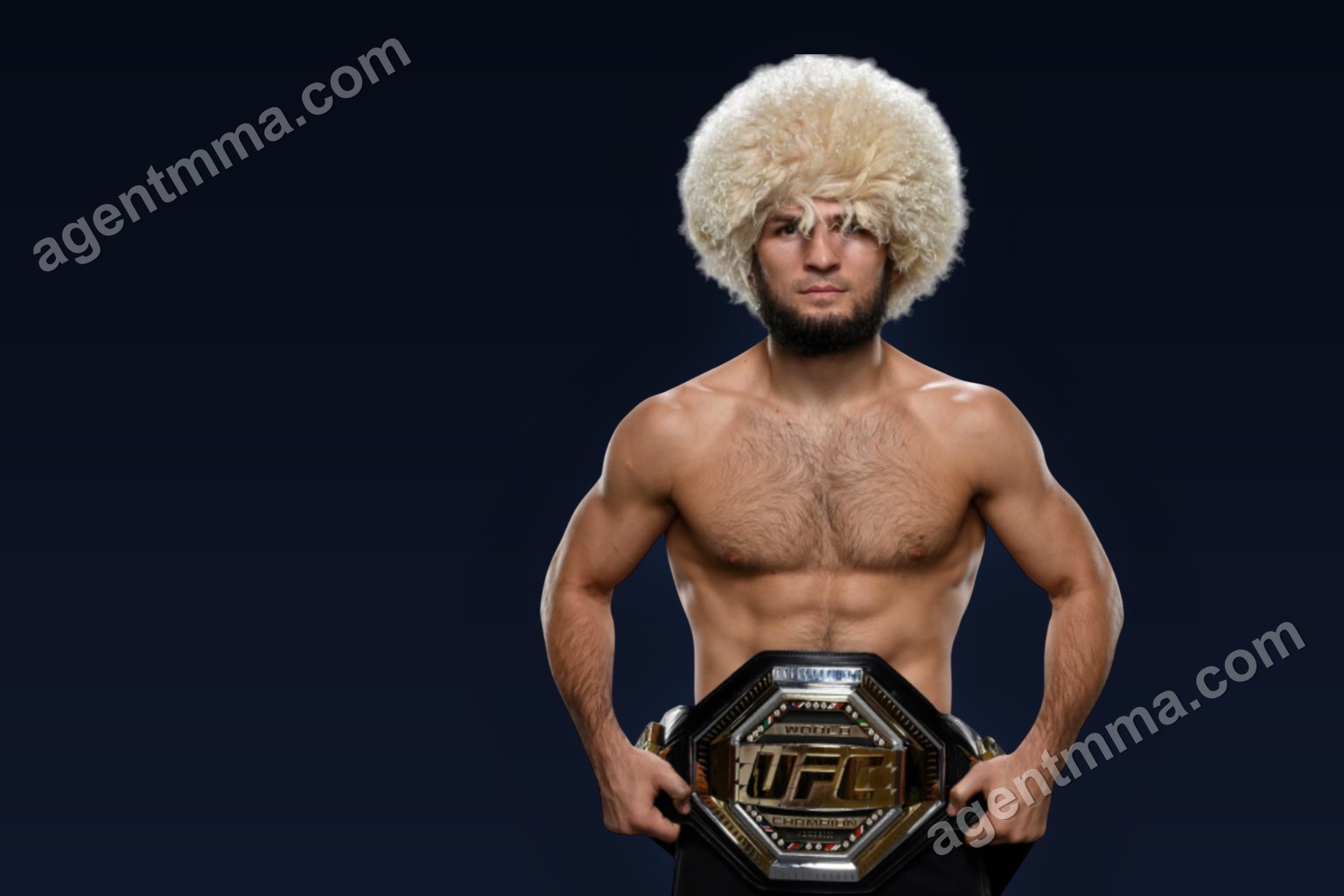
Khabib Nurmagomedov and Charles Oliveira make the shutdown period concrete. They don't prove its cause.
Nurmagomedov submitted Justin Gaethje at 1:34 of Round 2 at UFC 254. UFC Stats records the bout on October 24, 2020, inside the study's empty-arena window. The UFC later confirmed Nurmagomedov's retirement after that final title defense.
Oliveira's finish of Lee also sits inside the sample. Both results match the category that grew most: submission. Yet choosing two famous submissions after seeing the result creates selection bias.
You could pick empty-arena decisions instead. You could also pick crowd-era submissions. Anecdotes help you picture a category, but they cannot estimate a crowd effect.
This is a useful rule for MMA analysis. Let named fights explain the variable. Let the full sample estimate the pattern.
Do fighters perform better without fans?
A second study asks a related question and offers cautious support, not a final answer.
Tony Blomqvist Mickelsson and Vince Shaw studied 86 fighters who competed without spectators. They compared those appearances with each fighter's earlier history. Their dataset contained 586 bouts.
The authors built a combined performance measure rather than counting finishes alone. Fighters who won without an audience had posted poorer performances in their earlier crowd bouts. The paper treats this as possible social facilitation, where observers can help or hurt performance.
The authors also call the finding highly preliminary. Each fighter supplied few no-crowd observations. A win during the shutdown can reflect matchup, improvement, or timing as much as audience absence.
The two papers therefore point in a similar direction. They don't measure the same outcome, use the same unit, or solve the same bias.
Why the COVID comparison cannot isolate the crowd
The shutdown removed spectators, but it changed much more.
Fight camps faced gym closures and shifting local rules. International travel became harder. Cards moved between Brasilia, Jacksonville, Las Vegas, and Abu Dhabi. Some athletes accepted unusual dates or opponents.
The available roster changed too. Fighters able to travel and pass health protocols formed a selected group. That is selection bias, not background noise.
Betting odds help account for expected matchup imbalance. Weight-class controls handle broad finish-rate differences between divisions. Fighter fixed effects absorb stable traits for repeat athletes.
None of those controls measures camp disruption, late replacements, illness, or tactical instructions. A regression can only adjust for variables it has.
There is also an era problem. The paper compares 2019 with 2020. Technique, matchmaking, and the roster can drift within a year. The authors checked matching 2018 and 2019 periods and found no comparable difference, which helps. It doesn't turn 2020 into a random assignment.
How should a UFC prediction model use crowd data?
Treat crowd status as context, not a shortcut.
A model could add crowd presence, venue, date, and division as features. It should test them on future cards that were not used for training. The key question is whether calibration improves outside the shutdown sample.
The submission result should also stop you from using one global adjustment. A venue flag may interact with grappling style, corner communication, or event type. Those interactions need enough examples.
Don't convert the 6.89-point historical gap into a blanket prediction boost. That would assume the crowd caused the entire difference and that the COVID setting will repeat. Neither claim is supported.
For betting-adjacent analysis, price still comes first. A small contextual signal has no value if the market already reflects it. One study cannot turn silent arenas into a betting system.
How solid is this data?
The main strength is the sample: 731 UFC fights across matched calendar windows. The paper reports raw outcome counts and several adjusted models. Its checks include odds, weight class, gender, and fighter effects.
There are real limits. The study used public data first collected through Kaggle, then checked against UFC records. It wasn't a randomized crowd experiment. The 132-fight women's sample was small, and other promotions were excluded.
The paper also contains a presentation error. One total row and part of the methods swap the 351 and 380 group labels. The outcome counts, row percentages, event windows, and model coding show the intended mapping. Readers should still know the error exists.
The second study improves the comparison by following the same 86 fighters. Its no-audience sample per athlete was thin. Its combined performance score also answers a broader question than finish rate.
The best reading is narrow. Empty-arena UFC fights in this COVID-era sample had more submissions and more early finishes. A crowd effect is one explanation among several.
FAQ
Did UFC fights have more finishes without fans?
In one 731-fight study, yes. Empty-arena bouts finished early 52.42% of the time, versus 45.53% with crowds. The study found an association, not proof that spectators caused the difference.
Did empty UFC arenas cause more submissions?
Submissions were more common without crowds in the sample: 20.51% versus 14.47%. The data cannot isolate crowd absence from COVID-era changes in travel, camps, matchmaking, and fighter availability.
Do crowds make UFC fighters perform worse?
Two studies found patterns consistent with some fighters performing better without spectators. Both have limits, and crowd response can vary by athlete, sex, task, and setting. There is no universal penalty.
Should crowd size affect UFC fight predictions?
Crowd status can be tested as a small context feature. It should improve out-of-sample calibration before a model keeps it. A single COVID-era gap should never become an automatic finish adjustment.
Sources & further reading
Peer-reviewed studies and primary data behind this analysis.
- Kotrba: absent audiences and MMA performance (www.imcjournal.com)
- Mickelsson and Shaw: MMA performance without audiences (revistas.unileon.es)
- UFC Stats: completed events (www.ufcstats.com)
- UFC Stats: Oliveira vs. Lee (ufcstats.com)
- UFC Stats: Nurmagomedov vs. Gaethje (ufcstats.com)
- UFC: Nurmagomedov officially retires (www.ufc.com)
Put the data to work
Compare any two fighters head-to-head, or see what our AI predicts for upcoming UFC fights.
More from the MMA Lab
How Hard Do MMA Fighters Hit? What Force Studies Show
How hard do MMA fighters hit? Lab studies measure punch, kick and ground-strike force, and show why viral punch-machine scores mislead fans.
How Often Do UFC Fighters Survive a Knockdown? 3,005 Fights
How often do UFC fighters survive a knockdown? A 3,005-fight audit shows the real comeback rate once the dropped fighter reaches the next round.
How Often Are UFC Fights Canceled? Data and Causes
How often do UFC fights get canceled? A 725-booking audit shows the disruption rate, leading causes, replacement outcomes, and major data limits.

Do UFC Fighters Slow Down in Later Rounds? What Data Shows
Do UFC fighters slow down in later rounds? UFC fight pace by round shows no simple decline. See the studies, stats, survivor bias, and real limits.