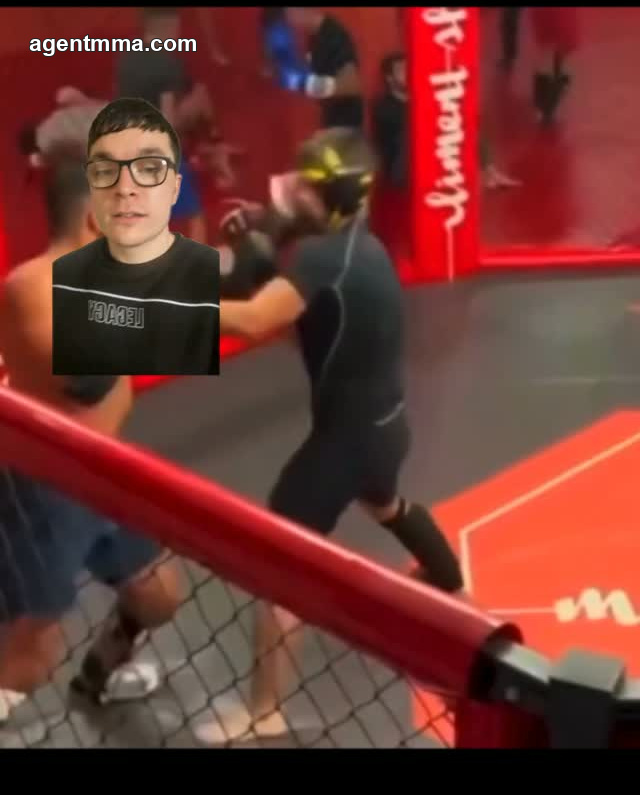

Sean O'Malley has experimented with the unconventional training methods popularized by Jiri Prochazka. The former bantamweight champion shared footage on his social media showing him attempting Prochazka's distinctive preparation techniques. Prochazka is known for his unique training philosophy that includes meditation and unusual physical exercises. O'Malley's post appears to be at least partially humorous in nature.
Sean O'Malley took a detour from his usual preparation this week, sharing social media footage of himself attempting the unconventional training methods associated with light heavyweight contender Jiri Prochazka — though the post carried a clear comedic undertone.

O'Malley, known as "Suga," competes at bantamweight and sits ranked fourth in that division at 31 years old. The Montana-born fighter out of MMA Lab carries a 20-3-0 record and is a former bantamweight champion. He lands 6.05 significant strikes per minute at a 60 percent accuracy rate, making him one of the more prolific and precise strikers in his weight class. His switch stance and fluid movement have long defined his style.
Prochazka, the subject of O'Malley's imitation, is a 33-year-old Czech fighter ranked second in the light heavyweight division with a 32-6-1 record. He trains out of Jetsaam Gym Brno and has built a reputation not just for his explosive striking — 5.69 significant strikes per minute at 55 percent accuracy — but for a deeply individual training philosophy that incorporates meditation alongside unconventional physical conditioning. Standing 191 cm with an 80-inch reach, Prochazka cuts an imposing figure whose preparation methods are as distinctive as his fighting style.

Why it matters
- O'Malley's post highlights the growing crossover appeal of Prochazka's training philosophy beyond the light heavyweight division.
- The humorous framing suggests O'Malley is engaging his fanbase during a period away from competition rather than signaling any serious methodological shift.
- Both fighters rank among the higher-volume strikers in their respective divisions, making the stylistic nod a natural, if playful, point of connection.