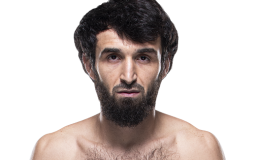

Retired heavyweight Alistair Overeem shared training photos on social media, revealing that he currently trains harder than when he was competing professionally. Overeem explained that during his career, training was about wins, ego, titles, and purses, focused on the next fight. Now his goal has changed - it's not about one night but about longevity. He trains differently now, focusing on recovery, mobility, and taking care of his body. Overeem says it used to be about results, but now it's about legacy.
Alistair Overeem has revealed through social media posts that his approach to training has transformed since stepping away from professional competition, claiming he now pushes himself harder than at any point during his active career.
The Dutch heavyweight, nicknamed The Demolition Man, retired with a professional record of 47 wins and 19 losses across a career that spanned multiple decades and organizations. Overeem is 46 years old and stands six-foot-four with an 80-inch reach, physical tools that helped make him one of the most recognizable and dangerous fighters ever to compete in the heavyweight division. During his time competing, he posted a striking accuracy of 64 percent and landed 3.67 significant strikes per minute, numbers that reflected the technical precision he brought to the sport.

In the social media posts, Overeem drew a clear distinction between the motivations that drove his training then and now. When he was competing, sessions were shaped by targets: wins, titles, purses, and the pressure of the next fight. He described that era as results-focused. Now, with no fight on the horizon, his priorities have shifted entirely toward longevity. His current regimen centers on recovery, mobility, and sustainable body maintenance rather than peak performance for a single night.
Why it matters
- Overeem framing retirement-era training around legacy rather than results signals a significant philosophical shift from his competitive mindset
- His comments highlight a growing conversation in combat sports about how athletes manage their bodies after years of high-level competition
- At 46, with his physical dimensions and career volume, the emphasis on mobility and recovery reflects the realities of maintaining an elite-level physique long-term