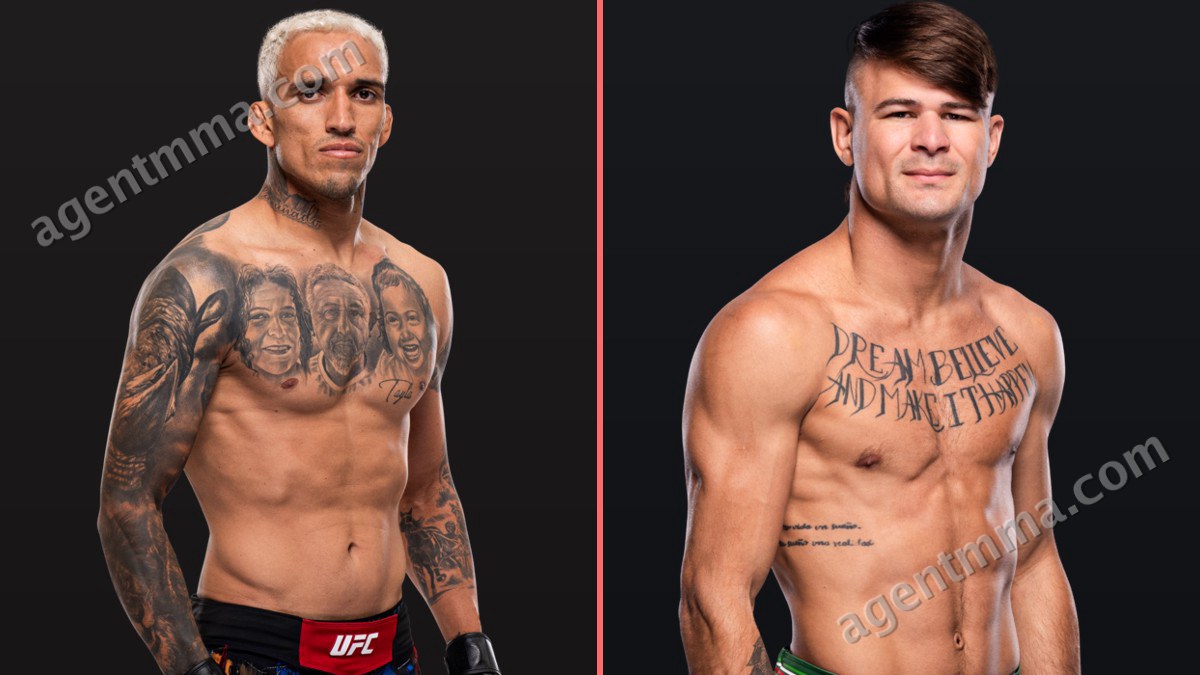

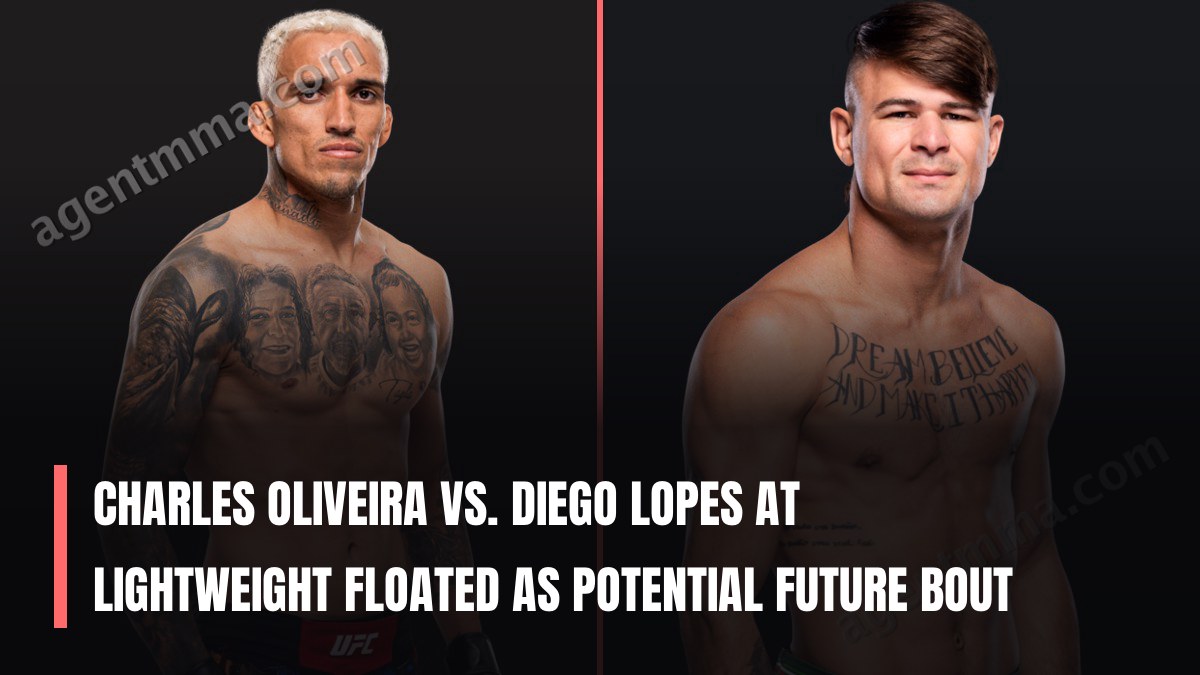
A lightweight matchup between Charles Oliveira and Diego Lopes is being floated as a possibility, though nothing has been confirmed or formally discussed. Oliveira recently posted a photo from the gym signaling his return to training, while Lopes shared a photo with UFC executive Hunter Campbell alongside a 155-pound hashtag.
A lightweight matchup between Charles Oliveira and Diego Lopes has been floated as a potential future bout, though the pairing remains unconfirmed and appears to be in the earliest imaginable stage of discussion — if it has been discussed at all.

Oliveira, ranked third in the lightweight division and eleventh in the pound-for-pound standings, recently posted a gym photo signaling his return to training. The 36-year-old Brazilian carries a 37-11-0 record and is one of the most decorated submission artists in UFC history, averaging 2.6 submission attempts per 15 minutes while landing significant strikes at a 54 percent accuracy clip. Fighting out of Chute Boxe Diego Lima, the five-foot-ten southpaw holds a 74-inch reach and has long been considered a top threat to any lightweight title picture.
Lopes, five years younger at 31, is currently ranked second in the featherweight division with a 28-8-0 record. The Brazilian representative of Lobo Gym MMA fueled speculation about a move to 155 pounds after sharing a photo with UFC executive Hunter Campbell paired with a lightweight hashtag. Standing five-foot-eleven with a 72-inch reach, Lopes averages 3.83 significant strikes per minute, making him one of the more active volume strikers in the organization.

Why it matters
- Oliveira is a former lightweight champion sitting just outside the title conversation at number three, and a high-profile opponent could push him back to the forefront.
- If Lopes were to move up to lightweight, it would represent a significant jump in weight class and raise immediate questions about where he would land in the divisional rankings.
- Both fighters are Brazilian and orthodox strikers, but their contrasting grappling tendencies — Oliveira's submission volume versus Lopes's comparatively limited ground game — would create a compelling stylistic puzzle.
Charles Oliveira vs Diego Lopes
See the AI pick, live odds and the full matchup breakdown